Appeal to Nature


Format: 21 × 29 cm
Pages: 148
Print: Riso ComColor
Binding: Japanese Binding
ISBN 978-3-912964-01-1
Year: 2026
The book is also available
with an Edition by the Artist.
Pages: 148
Print: Riso ComColor
Binding: Japanese Binding
ISBN 978-3-912964-01-1
Year: 2026
The book is also available
with an Edition by the Artist.
38,00 €
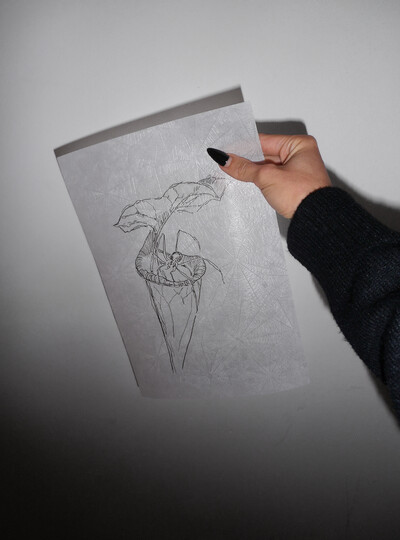
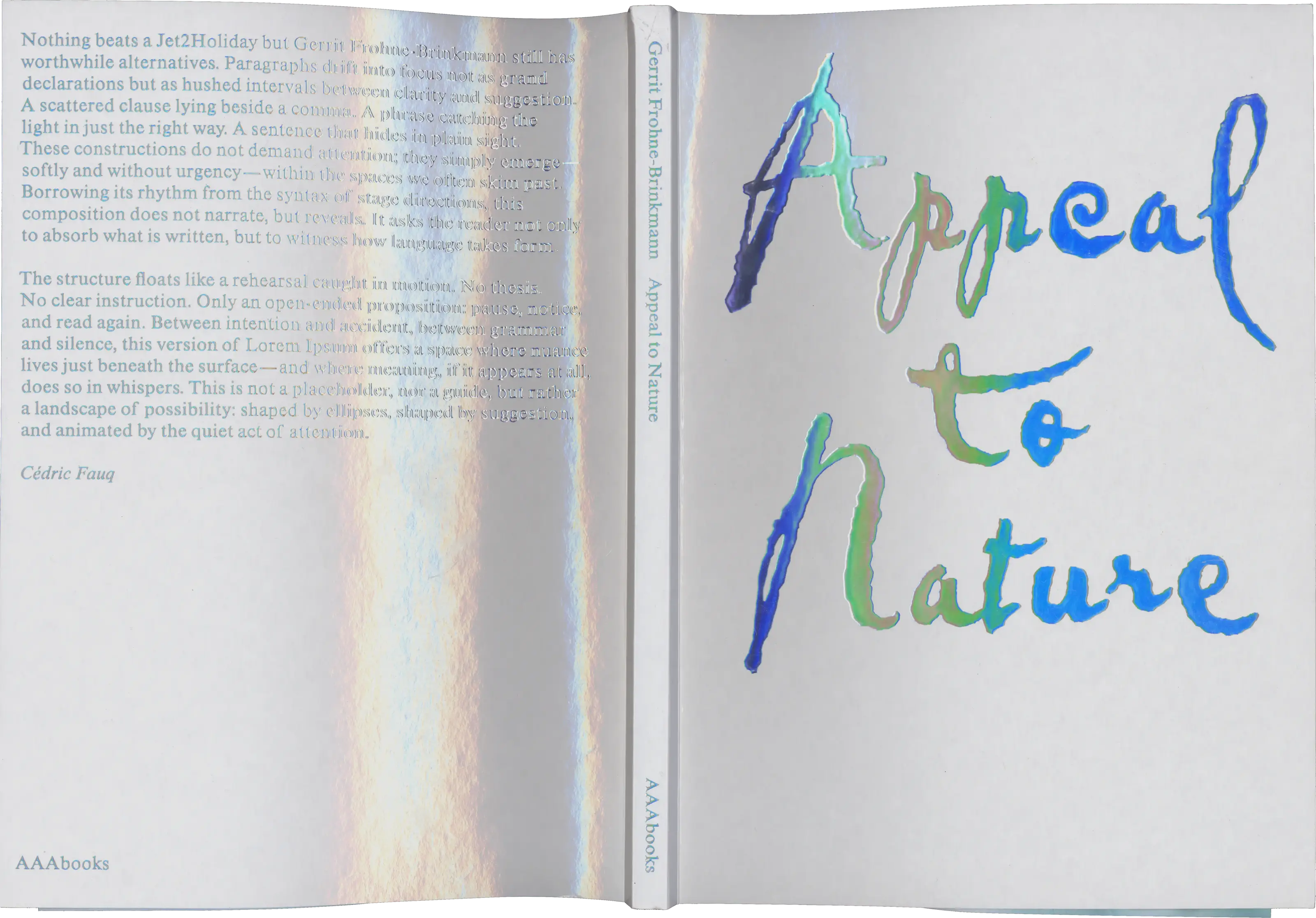
Nothing beats a Jet2 holiday, but Gerrit Frohne-Brinkmann has worthwhile alternatives. With Appeal to Nature, which spans more than ten years of sculptural practice, the German artist flattens dimensions to unfurl a panorama of his rigorous bestiary in fuzzy landscapes. You will encounter white tigers, robotic parrots and cats, a variety of hungry flowers — some more threatening than others — as well as many snakes, owls, laboratory mice, a few lovesick computer units, a fleet of unruly ropes, heaps of brain matter, borrowed mummies, and more. Can you spot the stinky titan arum?
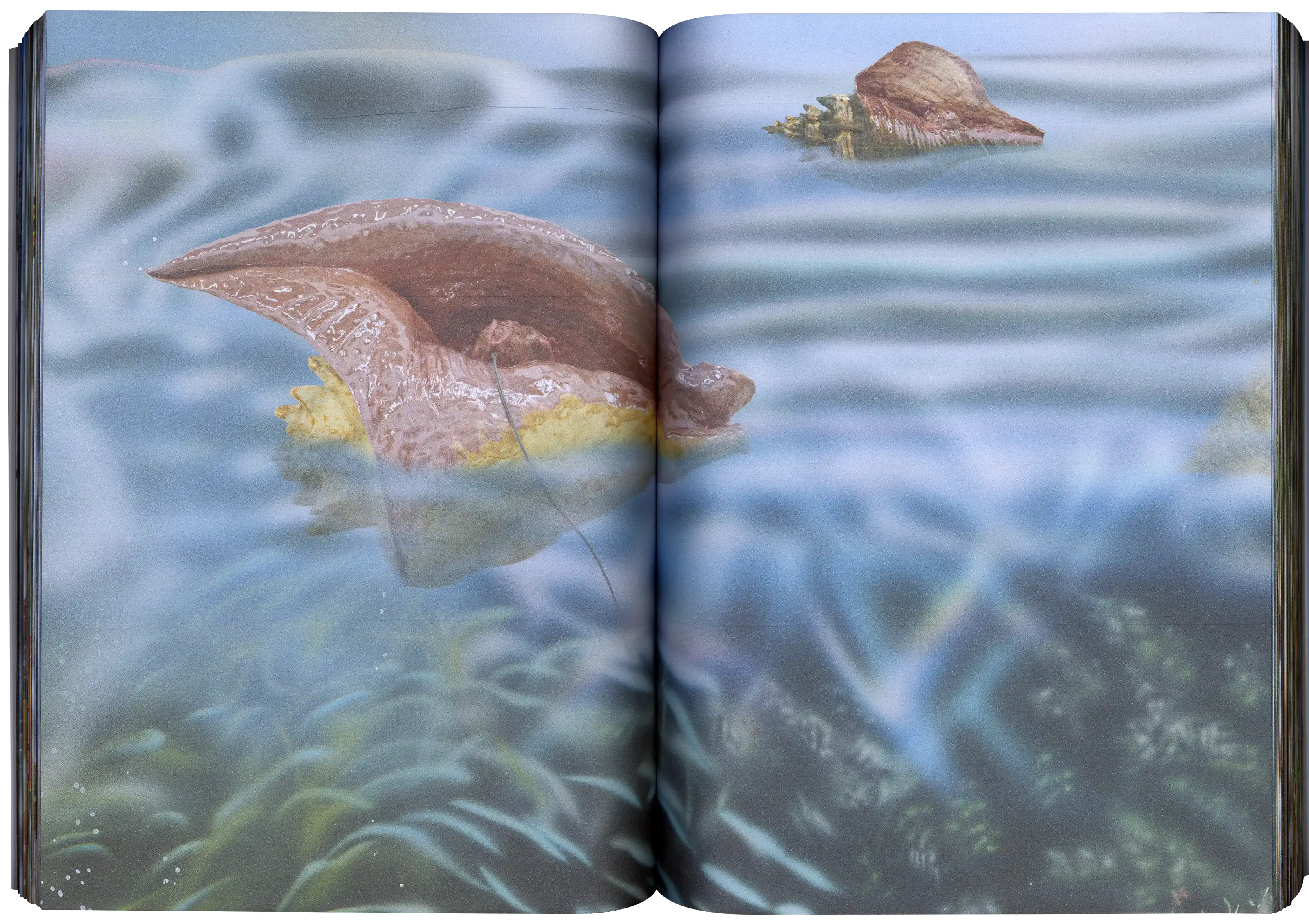
In these pages, the sculptures’ original surfaces, dimmed, leave space for naturalised errors. Artificial furs become more real than your own cats’ pelage, glazed ceramics come across silky. Collaged onto ultra-processed backgrounds which converge layers of airbrushed fairground facades and diorama décors, the sculptures-turned-images drift in and out the crafted hazed habitats — from luminous seabeds to prehistoric jungles. They keep cheating on their ‘real’ dimensions in a post-biscuits-Alice’s fashion.
By relocating his specimens from the pristine white cube to a much more charged — and sometimes purposefully confusing — setting, Frohne-Brinkmann grants us access to the expansive lore of his works, themselves based on species which oftentimes are either decaying, obsolete or have altogether disappeared… This should be enough for you to enjoy the greatest of trips!
Cédric Fauq
In these pages, the sculptures’ original surfaces, dimmed, leave space for naturalised errors. Artificial furs become more real than your own cats’ pelage, glazed ceramics come across silky. Collaged onto ultra-processed backgrounds which converge layers of airbrushed fairground facades and diorama décors, the sculptures-turned-images drift in and out the crafted hazed habitats — from luminous seabeds to prehistoric jungles. They keep cheating on their ‘real’ dimensions in a post-biscuits-Alice’s fashion.
By relocating his specimens from the pristine white cube to a much more charged — and sometimes purposefully confusing — setting, Frohne-Brinkmann grants us access to the expansive lore of his works, themselves based on species which oftentimes are either decaying, obsolete or have altogether disappeared… This should be enough for you to enjoy the greatest of trips!
Cédric Fauq